
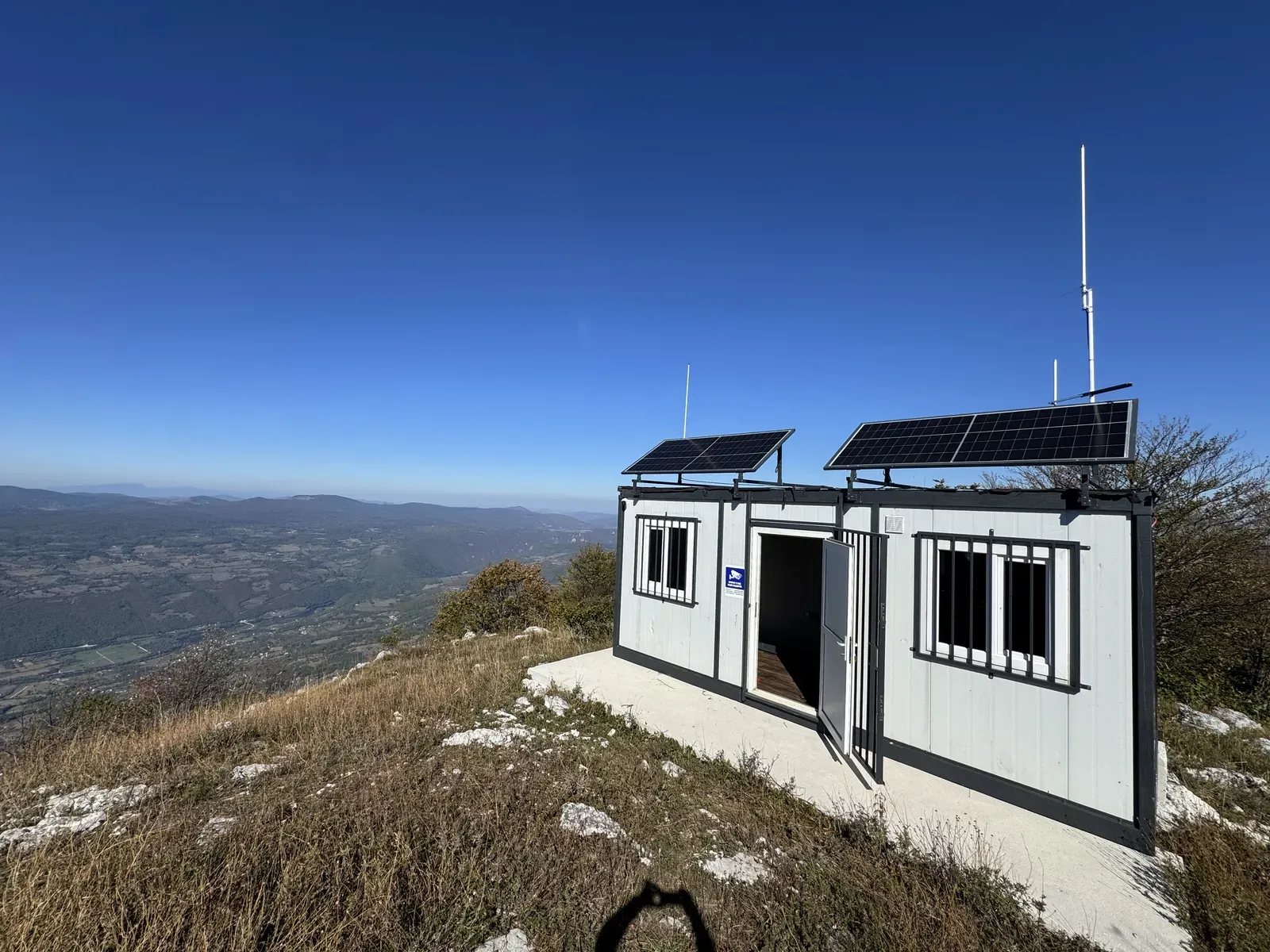
After more than a year of planning, preparation, equipment testing and work by members of Radio Club “Nikola Tesla” Banja Luka, the Čemernica project reached one of its most important moments. The technical container, prepared as the central facility of a future radio communications site, was transported to the summit of Čemernica and placed on a prepared position at Goli Vis.
Behind a moment that photographs can reduce to a single container arriving on a mountain lies a much longer story. From the first idea of a new amateur radio site, through terrain and propagation assessment, administrative procedures, construction work and foundation preparation, to the design of power, radio systems, network infrastructure and remote monitoring — every step required time, knowledge and many hours of work.
With the container’s arrival on Čemernica, that story took physical form on the mountain summit for the first time.
More than a year from idea to summit
The idea of building a new amateur radio site did not appear by chance. A large part of the Banja Luka region outside the coverage of the main repeater on Kozara had long had weaker VHF/UHF amateur radio coverage. During earlier club activity from Čemernica, including VHF contest work, the location showed very strong potential for radio communications.
Goli Vis stood out in particular — a dominant summit at 1,339 metres above sea level. Height, position and open terrain supported the idea that Čemernica should not remain only a place for occasional portable operation, but a permanent amateur radio site with several interconnected communications systems.
From that idea to the day the container arrived on the summit, more than a year of active work passed.
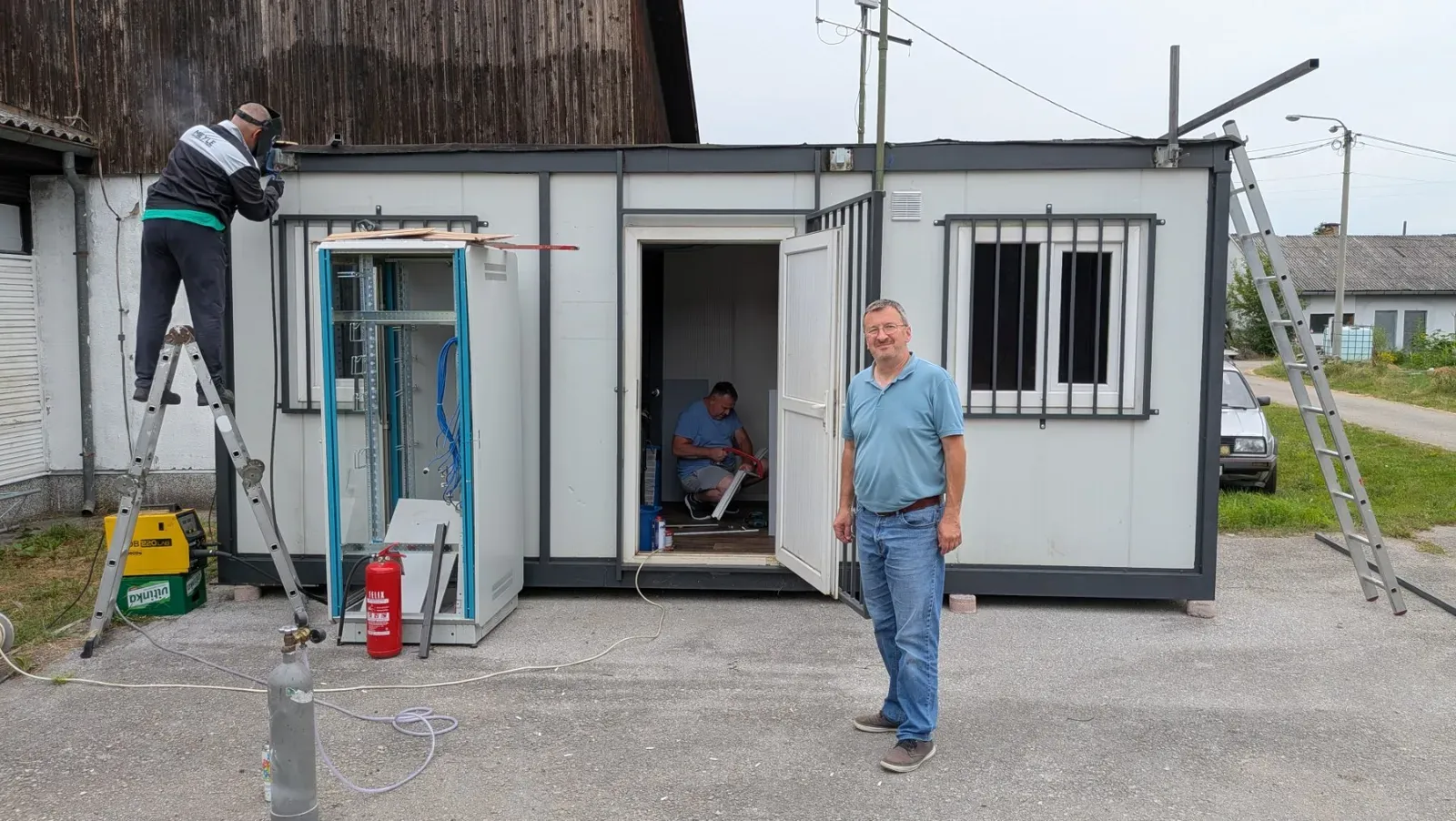
Before transport, a long list of work had to be finished — work that a single photograph never shows: defining the site concept, completing administrative and regulatory procedures, preparing the terrain, building the foundation, planning equipment and power layout, and testing system parts before they face mountain conditions.
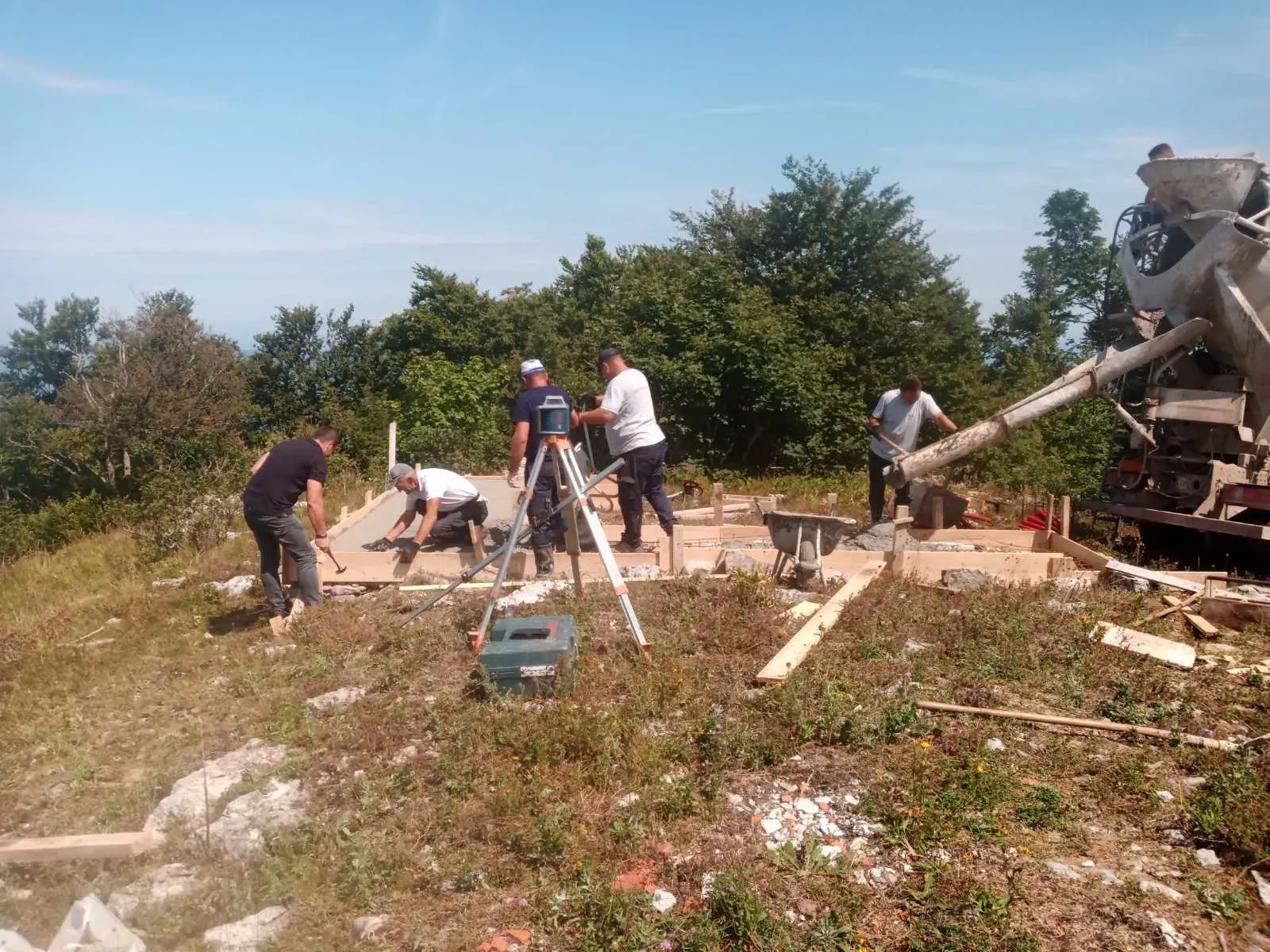
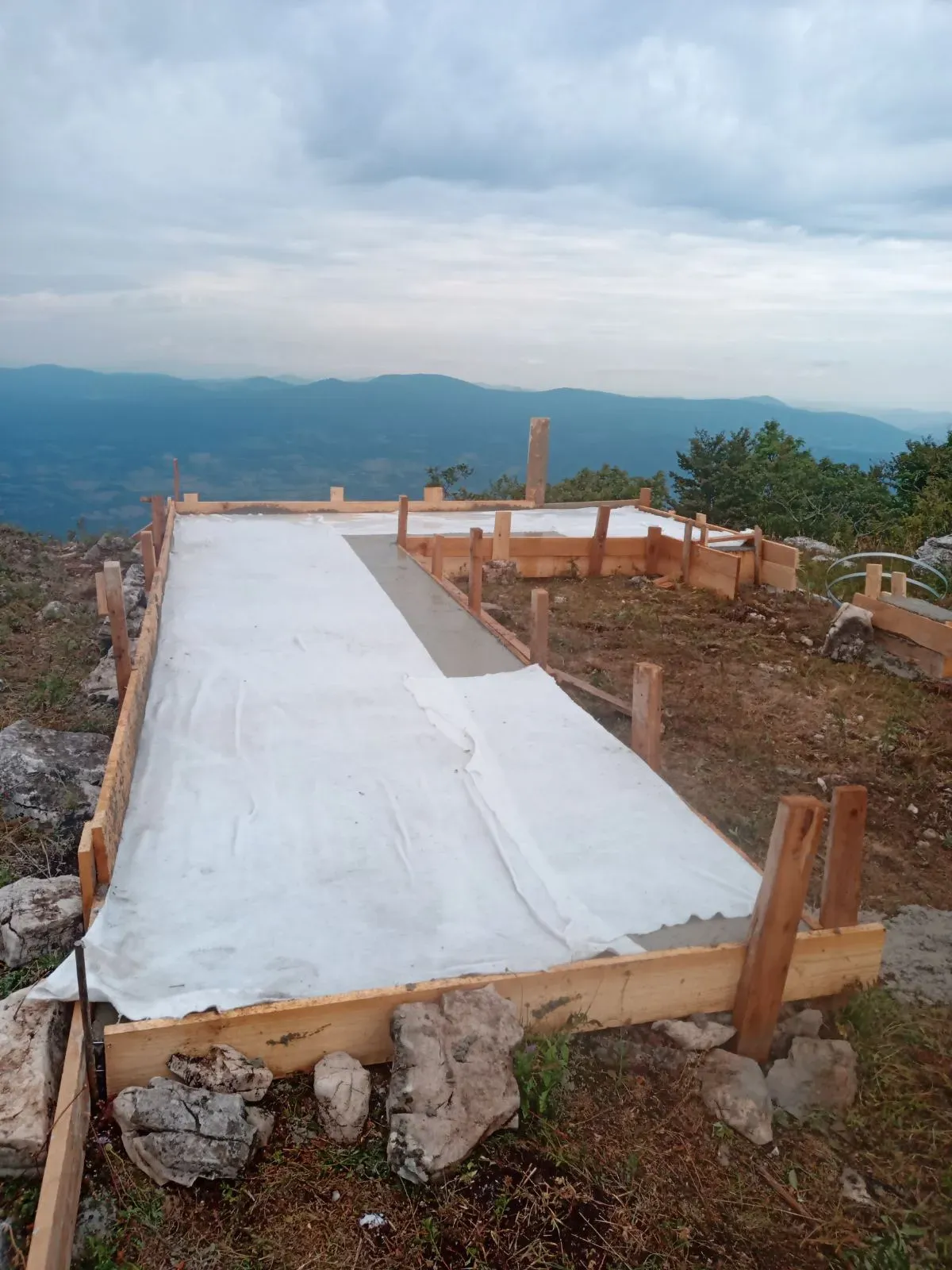
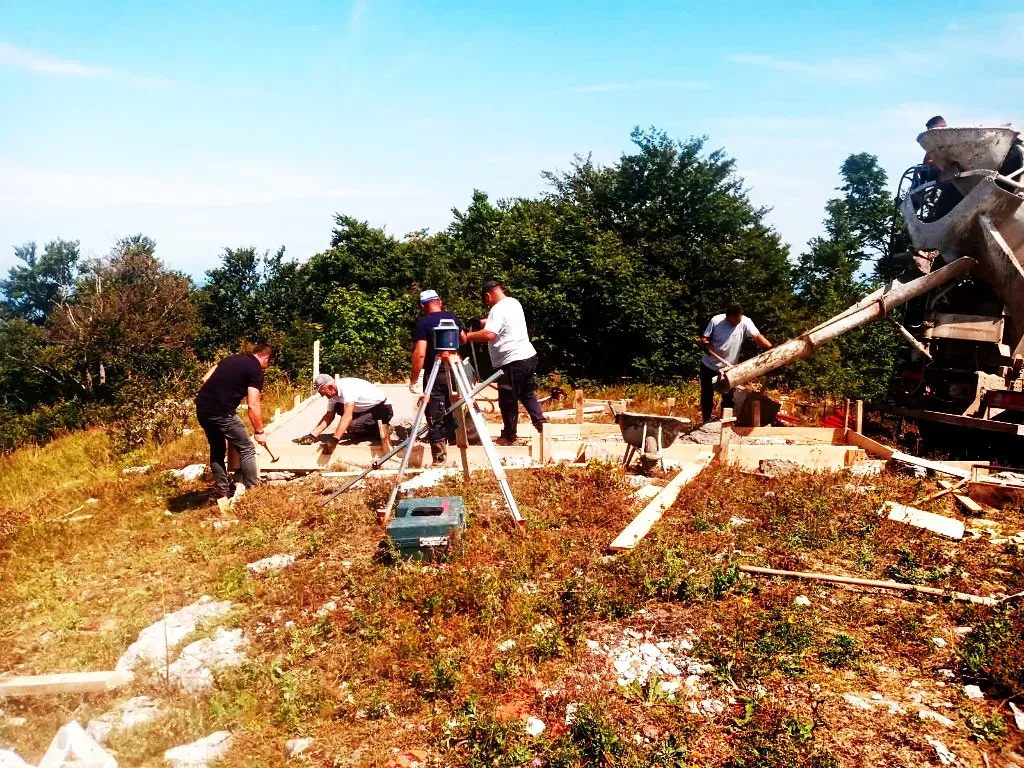
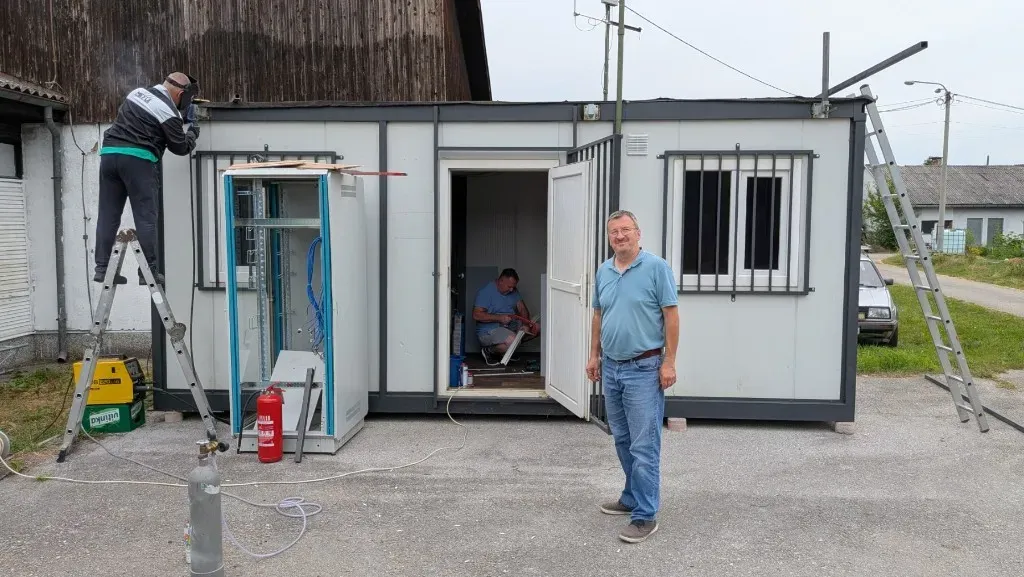
From the start, Čemernica was conceived as a system — not merely a place for one more repeater.
The hardest challenge was the final stretch
Transporting the technical container was a project of its own.
Reaching the mountain site was not a matter of ordinary freight haulage. The final approach to the summit runs over demanding, very steep terrain, so a vehicle and method of transport had to be found that could safely climb and still deliver the container to the prepared foundation.
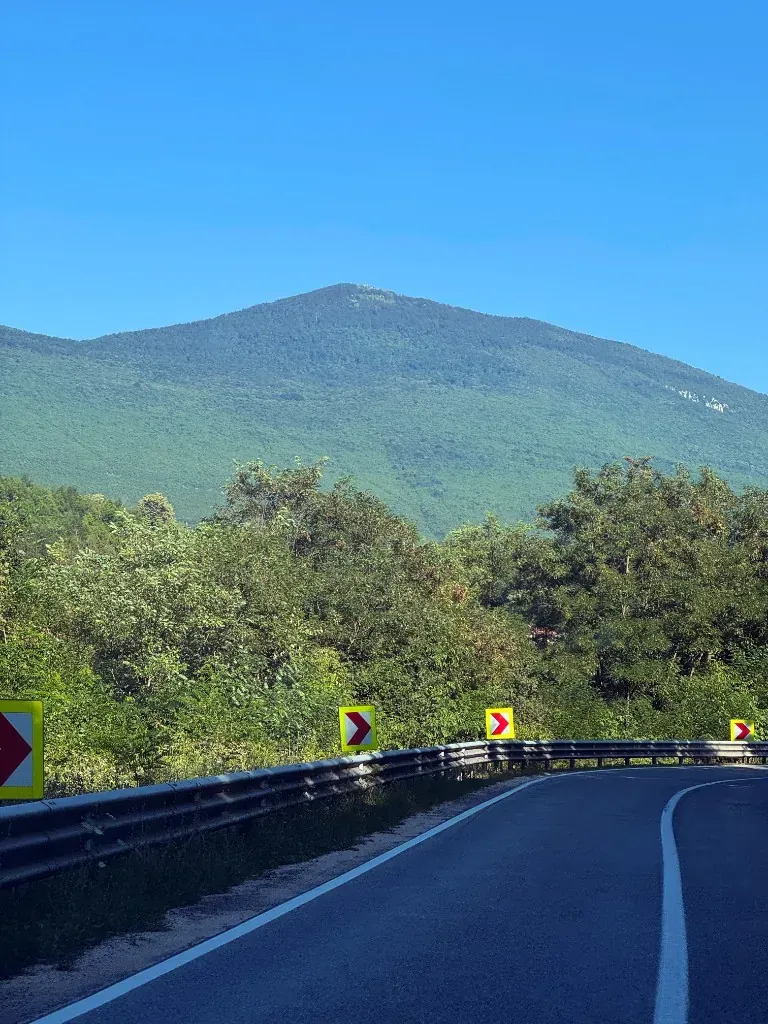
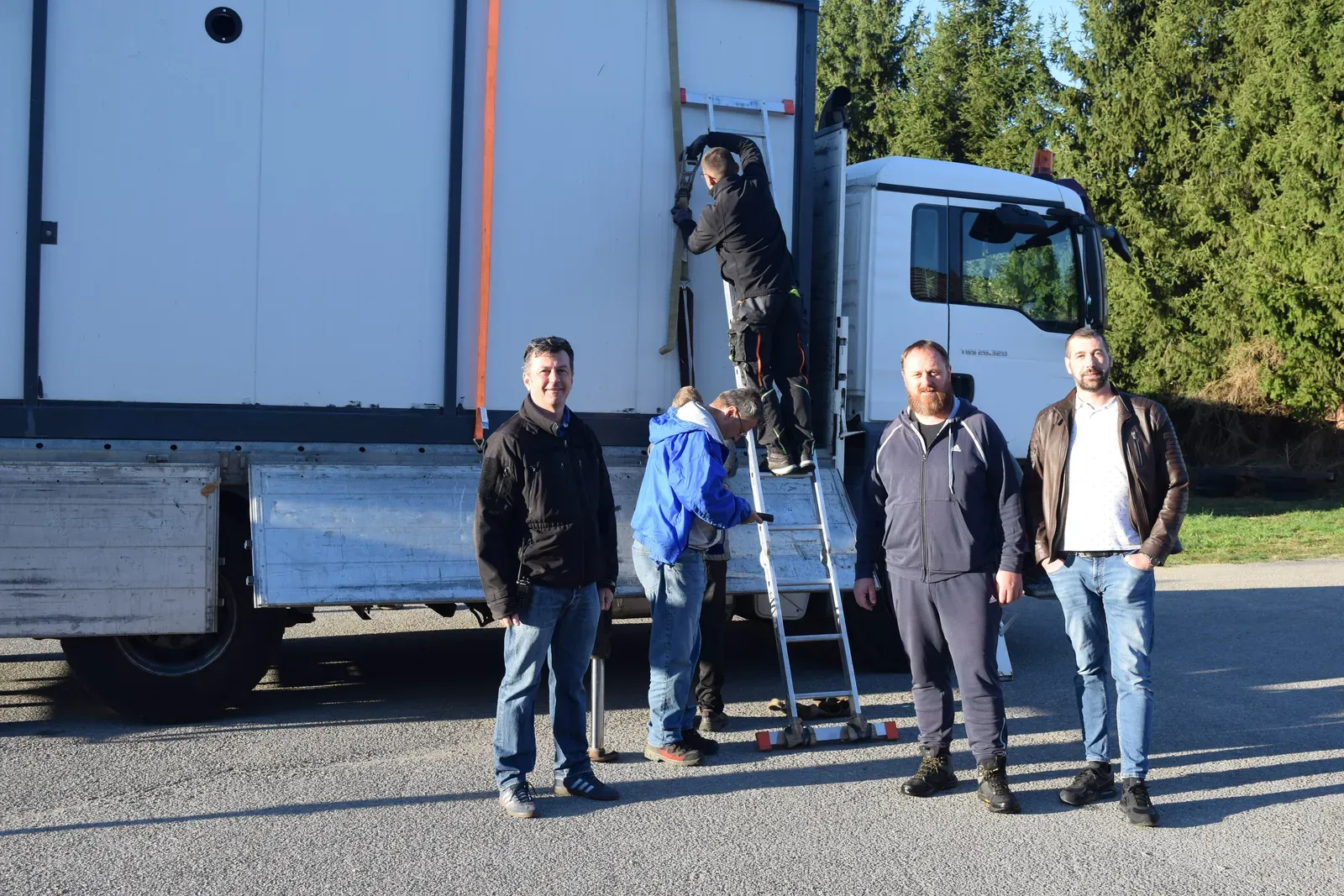
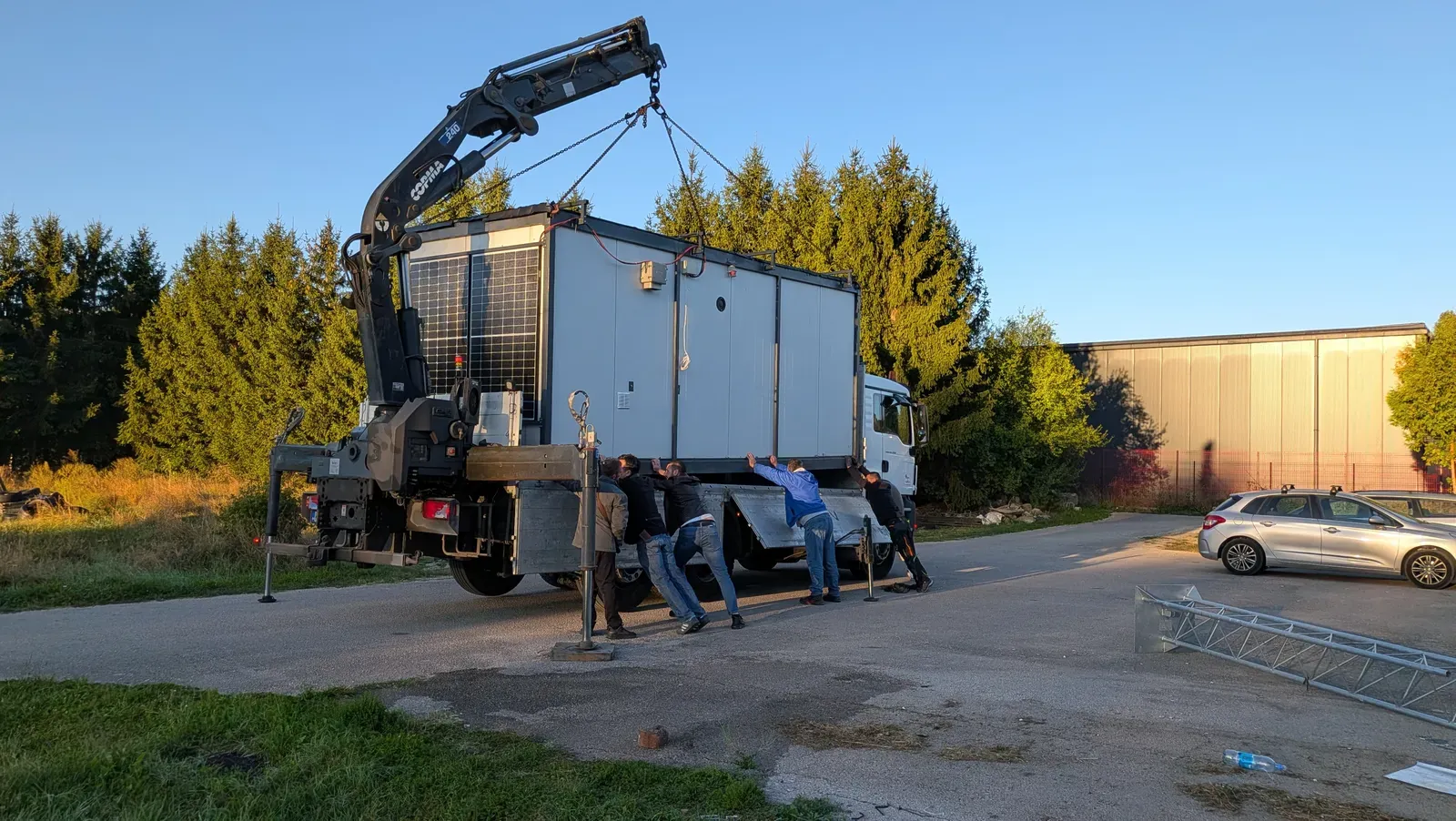
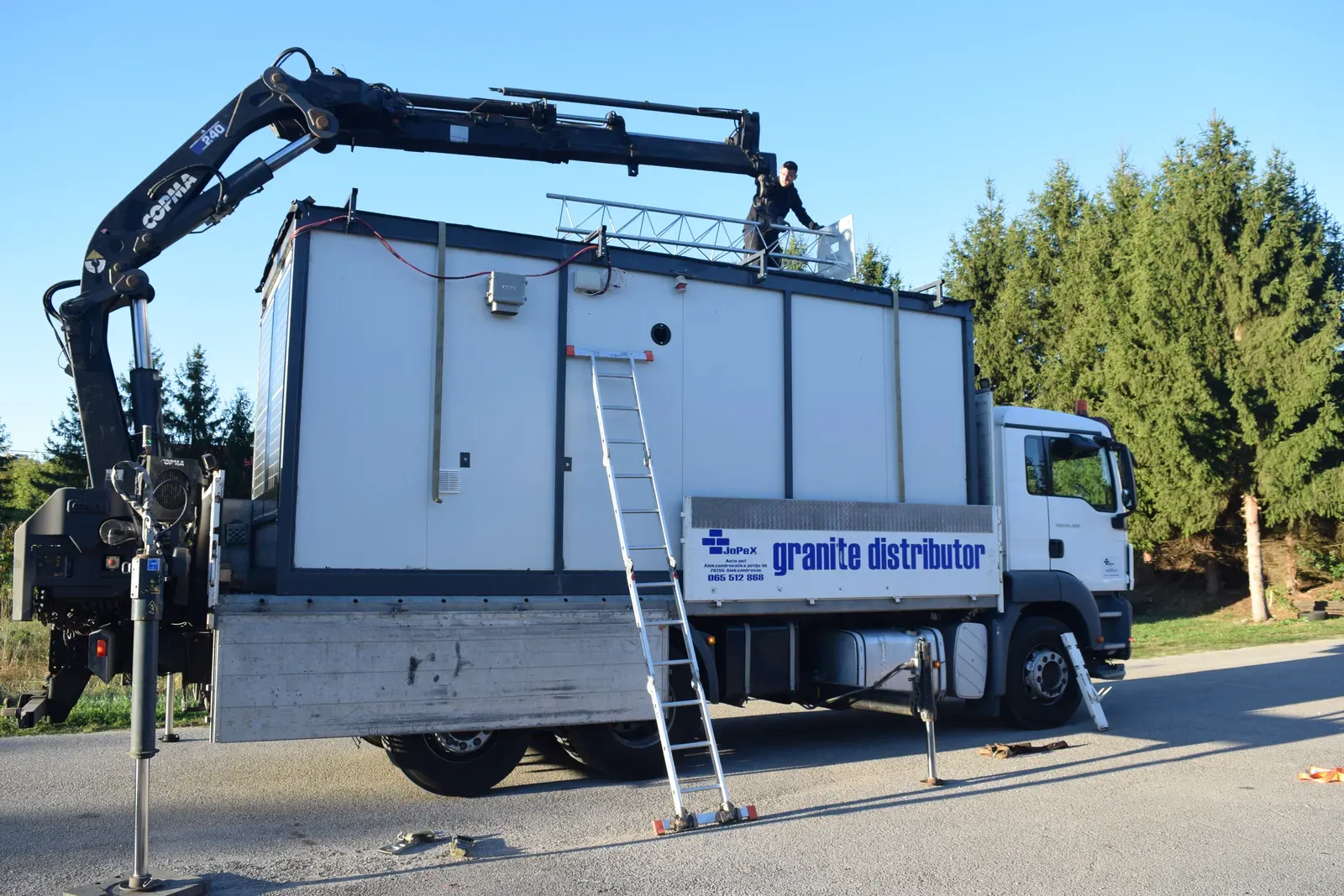
Logistics was one of the reasons this moment took so long to prepare. Object size and mass, the condition of the access road, slope, and room to manoeuvre on site all had to be considered before transport could begin.
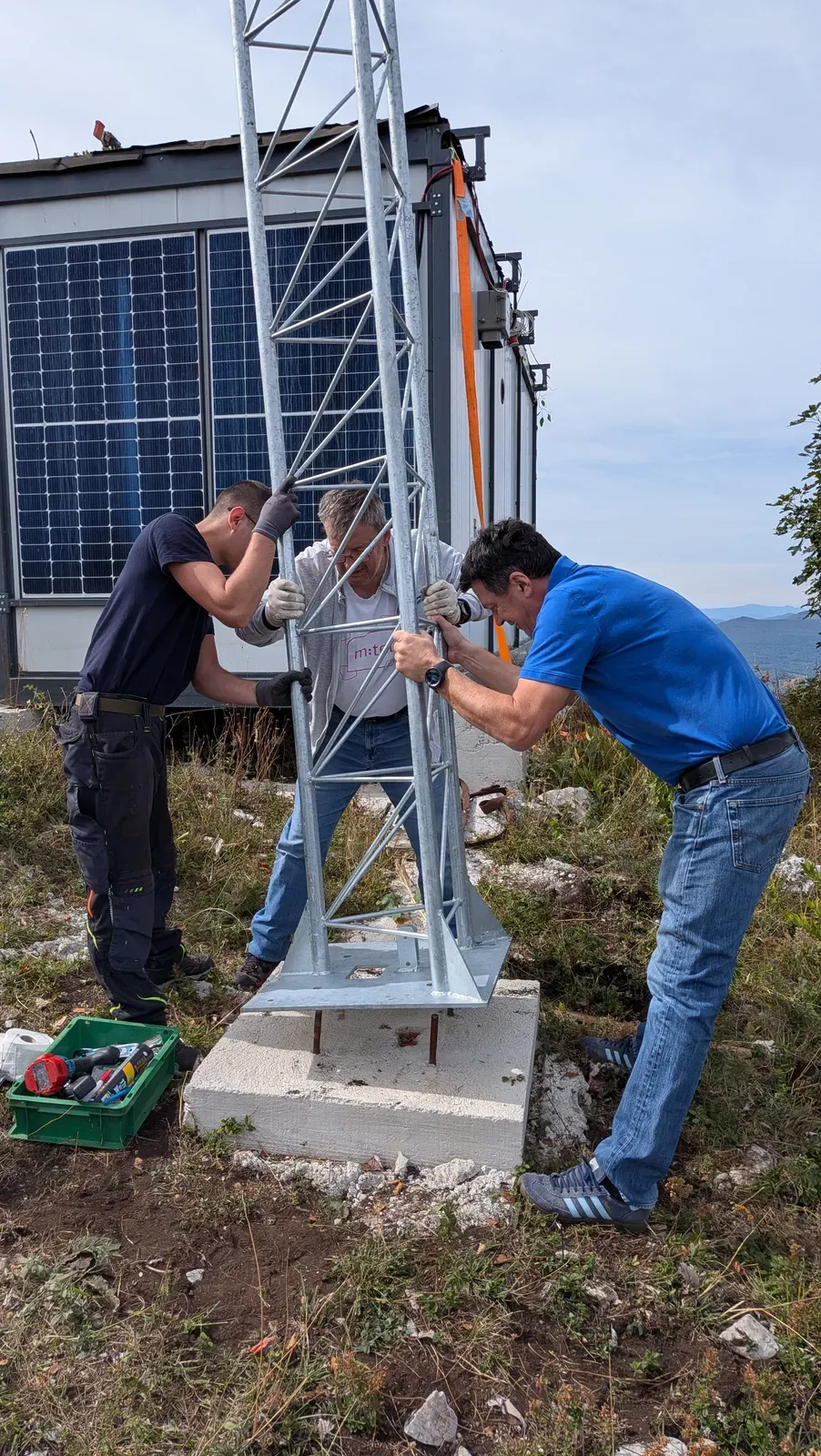
Four members of Radio Club “Nikola Tesla” Banja Luka set out for Čemernica that day: Stevo Antić E73CV, Siniša Maksimović E73SI, Slaviša Tumenko E76TP and David Blagojević E73BD. Their task was not only to accompany the container to the summit, but after placement to finish on-site work, connect prepared infrastructure and bring the system on air.
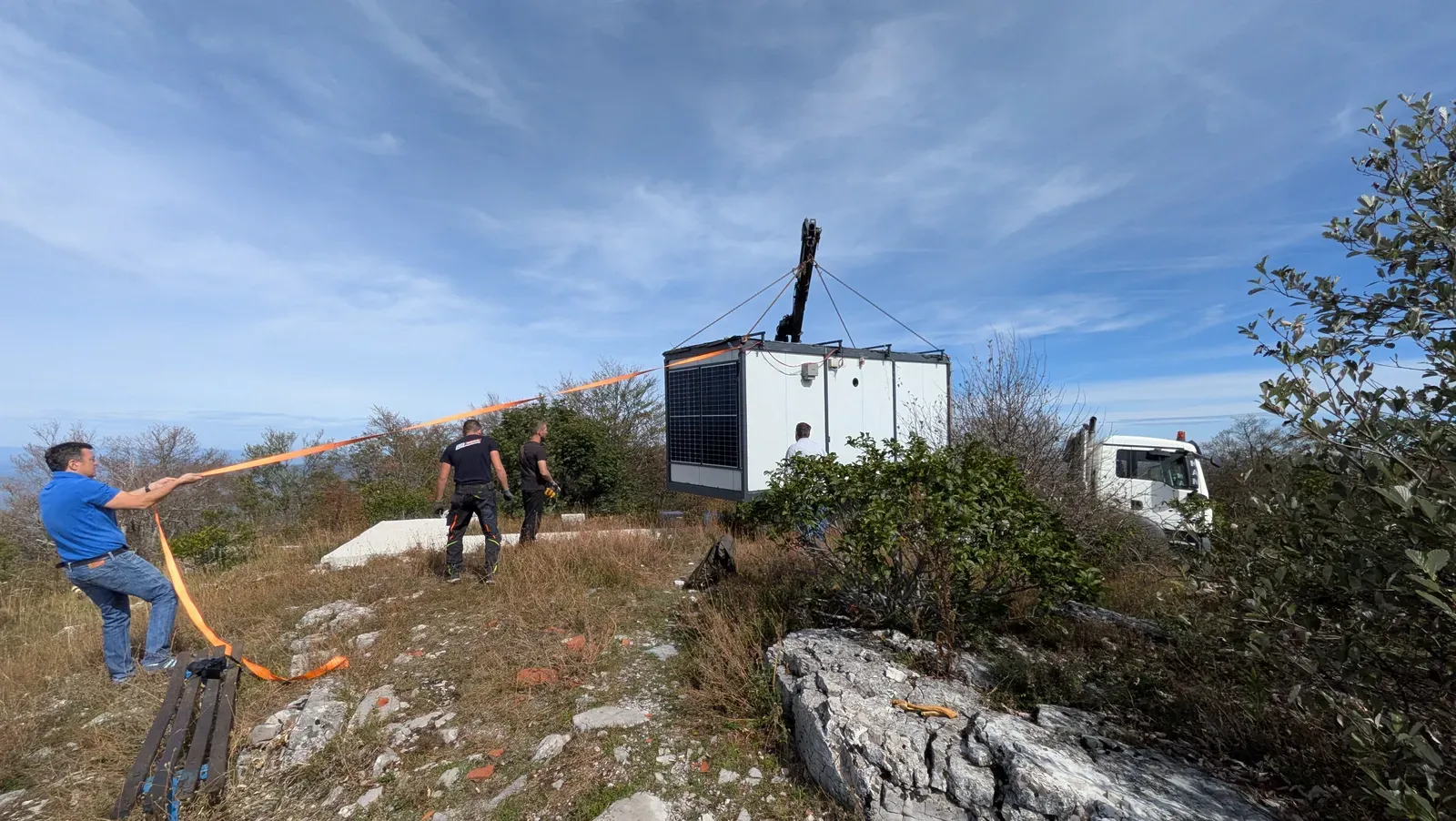
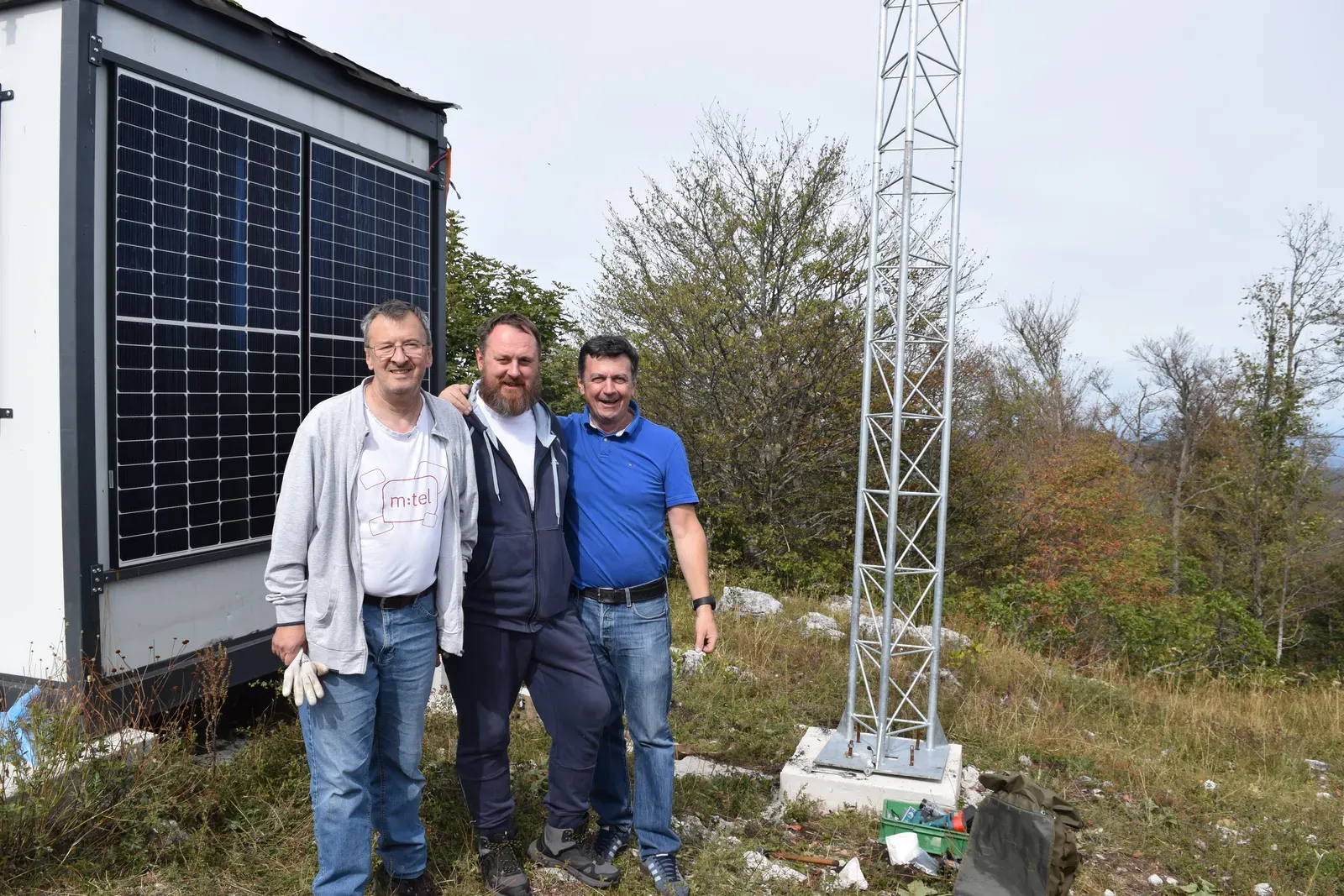
When the container finally moved toward Goli Vis, much of the previous months’ workshop and field preparation already lay behind the team. Ahead of them remained what was probably the most physically and logistically demanding part of the whole effort — the final climb to the place where the system would continue its life as a permanent amateur radio site.
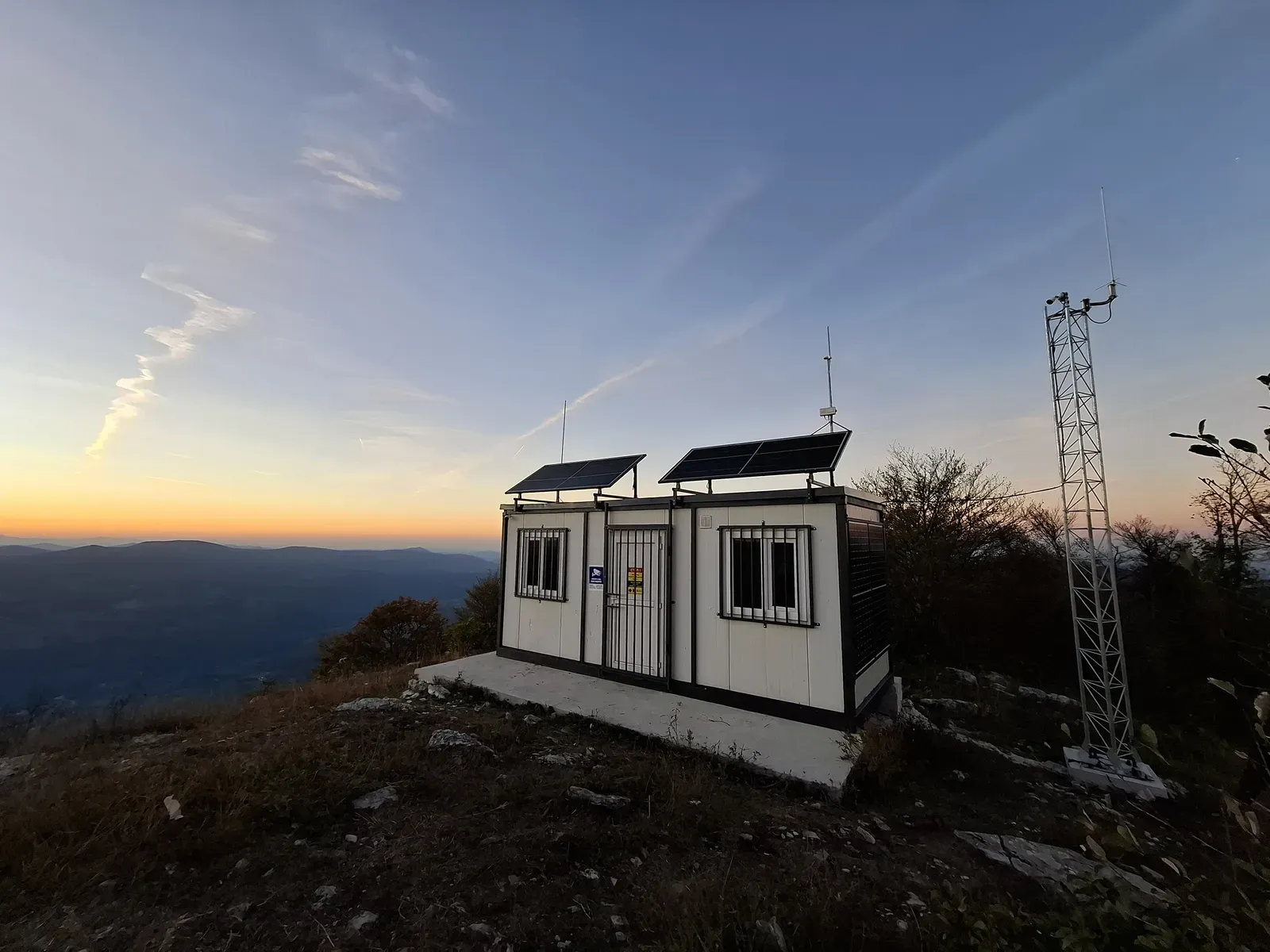
After a successful transport, the container was set on its prepared position and the team continued with final connections and checks. The same day the system was successfully brought into service, giving more than a year of planning, preparation, testing and work its first concrete result on the summit of Čemernica.
For the club members, reaching the summit was therefore more than a completed transport. It was the moment when a project that had long existed in drawings, tests, equipment and workshop labour finally became an active radio communications system at 1,339 metres above sea level.
One facility for several communications systems
The technical container on Čemernica was never intended as space for a single radio.
It brings together radio systems, digital networks, power, network infrastructure and equipment for remote monitoring and control. The idea is that different systems on site operate as one technical whole.
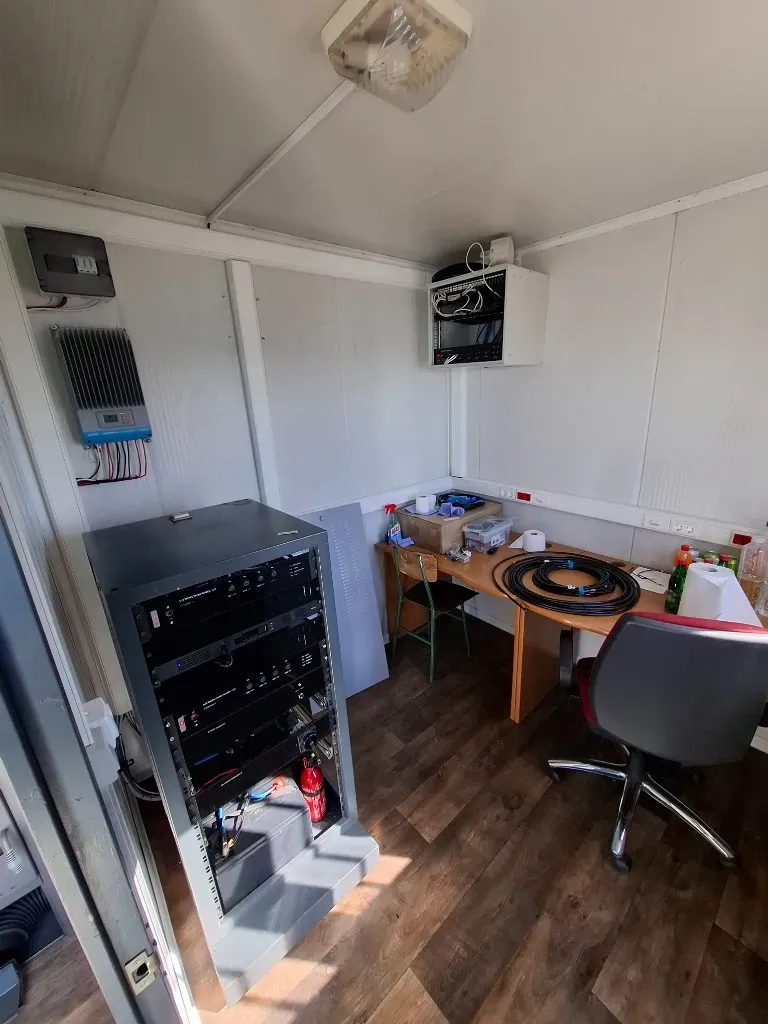
Central place belongs to the trunk UHF/DMR repeater infrastructure, but from the outset the project also covered APRS, Meshtastic/LoRa, IP network infrastructure, autonomous power and remote system control.
Čemernica thus becomes far more than a classic repeater site.
It is meant to be a shared infrastructure point from which different amateur radio and experimental communications systems can grow.
UHF and DMR — Čemernica’s main radio system
Voice radio communications are based on a Hytera HR1065 repeater that supports analogue UHF and digital DMR operation.
Under the currently defined system configuration, the repeater transmits on 438.850 MHz and receives on 431.250 MHz, with a −7.600 MHz offset. Analogue operation uses CTCSS 123 Hz. The DMR side uses repeater callsign E79DC, Color Code CC1 and DMR ID 218020.
The antenna system is a Diamond X50, mounted about six metres above ground, with a declared gain of 7 dBi. The repeater is configured for 20 W, while coverage modelling used a value of approximately 10 W ERP.
Site height plays a key role here. Instead of trying to compensate for a poor position with high power, the system uses the advantage of a dominant summit and an open radio horizon.
Čemernica should therefore provide better local and regional communication in an area that previously had weaker amateur radio infrastructure coverage.
APRS — data and positions over the radio network
A second important part of the system is APRS infrastructure on 144.800 MHz.
APRS enables exchange of digital data over a radio link — from positions of mobile and portable stations to short messages and other telemetry.
The Čemernica system is designed for 10 W transmit power and a vertical Procom antenna with 5 dBi gain, mounted about three metres above ground. With losses on approximately eight metres of RG214 coaxial cable included, the calculated ERP is about 16.46 W.
By placing an APRS node on a dominant mountain site, Čemernica also takes a role in digital packet radio traffic — not only in classic voice communication.
Meshtastic — another layer of the communications network
The third radio system on site is a Meshtastic/LoRa node on 868 MHz.
Unlike a classic repeater, this is a very low-power system that enables decentralised exchange of short digital messages between nodes.
For this purpose Čemernica uses a LilyGo T3S3 with 100 mW / 20 dBm output, connected to a vertical MikroTik LoRa antenna with 5 dBi gain, about four metres above ground. The system uses the Meshtastic LongFast profile.
For low-power technologies, a dominant location such as Goli Vis is especially interesting. A node at 1,339 metres above sea level can become an important point in a wider mesh network, and future network development and field experience will show the real range and capabilities of such a system.
A site that must be able to run on its own
One of the most important design requirements was that Čemernica infrastructure must not depend on the classic power grid.
The facility was therefore designed around an autonomous 12 V off-grid system linking solar power, battery capacity and energy distribution to communications and network equipment.
This is not only a practical solution for a remote mountain site. Energy autonomy directly affects the reliability of the whole system.
Radio equipment, network devices, APRS and Meshtastic nodes and monitoring systems must keep working even when nobody is on site.
That is why power and energy management were treated as seriously during project preparation as the radios themselves.
A system we can monitor from Banja Luka
Čemernica is a remote site, and every trip to the summit needs time, organisation and suitable weather.
Network infrastructure with remote monitoring and control was therefore planned from the start.
The goal is for club members to follow the state of key systems without a physical trip to the mountain, check equipment operation and respond when a technical response is possible.
Network connectivity also enables services that need IP communication and leaves room for further site development.
In that way Čemernica is not only a radio site. It becomes a remote technical station that can be managed and upgraded as club needs evolve.
Much more than equipment
Behind every device that will operate on Čemernica stands a large amount of work that never appears in a final technical specification.
Planning, electronics, radio engineering, networks, power systems, construction, material procurement, testing, equipment preparation, transport and field work all had to come together for the system to reach this stage.
Different club members took part in different parts of the project, and an important role also belonged to people, organisations and companies that supported it with equipment, materials, services or funding.
That is why the container’s arrival on the summit is not the result of a single day’s work.
It is the result of more than a year of preparation.
The container has arrived. The work continues.
Placing the technical container on Čemernica is one of the project’s largest milestones — but not its end.
Final assembly and infrastructure connection, real-world system checks and further site improvement still lie ahead.
Plans already include increasing battery capacity for greater autonomy, a weather station that would send data via the internet and the APRS network, a dedicated antenna system for remote amateur radio operation, and further finishing of the facility’s interior and exterior.
Each of those upgrades will widen what the site can do, but the most important step has now been taken.
The facility prepared over many months has reached its place.
At 1,339 metres above sea level, on Goli Vis above the Banja Luka region, Čemernica now has infrastructure around which UHF/DMR, APRS, Meshtastic and future club amateur radio systems will continue to develop.
The path from idea to first signal is not fully finished yet.
But after more than a year of work, planning, testing and preparation, Čemernica has finally received its facility on the summit.